Progress and the New Year
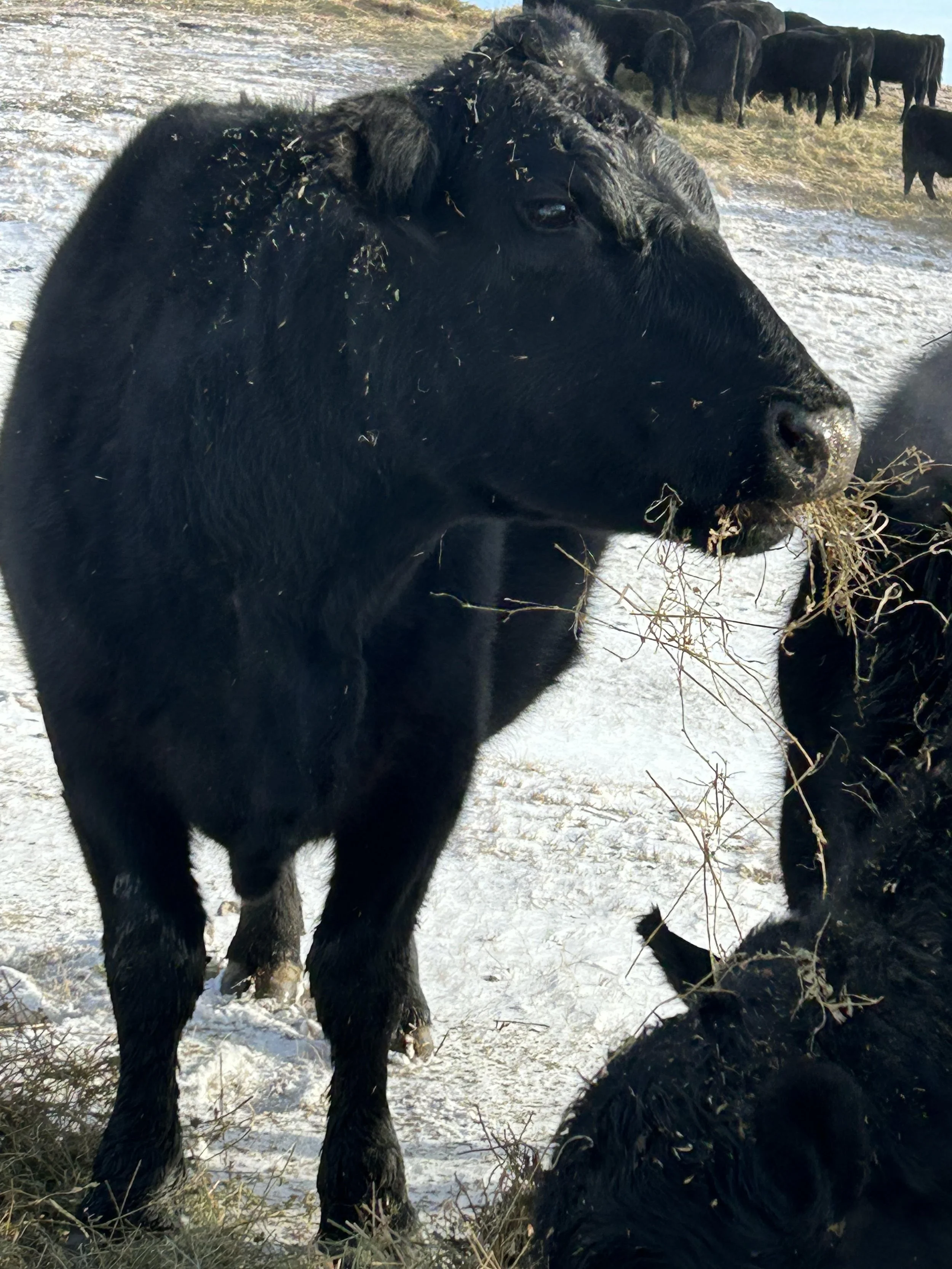
The week between Christmas and New Year’s offers a good time for reflection.
Cold weather tests my ability to predict and prepare.
So when temperatures plummeted from the 40s to -8 degrees during the week between Christmas and New Year’s, tractor time gave me a chance to review how I ranch.
I had just spent much of the past two weeks playing cat-and-mouse with my cows.
They were supposed to be grazing on old grass, cover crop stubble and alfalfa, but the neighbor’s succulent, green winter wheat called them like a forbidden, yet irresistible, siren.
To the left was old, dead grass – still nutritious enough to keep a body alive.
On the right was the sweet nectar of the Gods, all for the taking except for those barbed strands.
Their heads swung like pendulums.
They stepped to the left, then the right, hesitated but could resist no longer.
Graciously, the cows showed me where another post was rotten.
They nosed through the woven and barbed wire fence, reached for the tender shoots, and found their way to the middle of the crop.
Then I came along, herded them back into my field, fixed the hole and watched them weigh their options again.
Finally, I got tired of our game and rebuilt a mile and a half of fence.
Then I offered a truce -- their first bale of hay for the season.
The cows agreed to my conditions.
Clearly, 2026 offers an opportunity to improve some fencing.
But I know more than I used to about tractors in cold weather.
My tractor is old and my shop is unheated so when the temperature dropped I plugged in the tractor’s engine warmer for a couple of hours before I attempted to crank it.
My expert mechanic told me that a farmer’s tractor almost never blows an engine, but a rancher’s tractor might -- all because a farmer starts a tractor when it is warm enough for plants to grow and the engine oil to flow. A rancher starts a tractor when it is cold enough that cows need feed and the oil doesn’t lube the engine until it warms up.
After that conversation and a tractor with a blown engine, I stuck a heater on the oil pan for a couple of hours, too.
Then I fired up the tractor to fill my bovine and ovine furnaces.
Green, leafy hay grows big babies, but digesting rough hay keeps the cows warm.
First, I putt-putted out to the stack of premium hay, spreading cheers and smiles among the herd and flock. Then I rolled out the old, stemmy hay feeling as if the chocolate mousse came first on the buffet line, before the spinach.
Maybe I should have ingested some of that rough hay, too, before I thawed some water troughs.
A windchill of -20 is as hard on water troughs as it is on humans.
My troughs are heated, but they are no match for below-0 cold snaps.
If I had known then what I know now, I would have installed better water troughs, but I’ve thawed these troughs often enough to start with a hammer and then bring out the hot water if I need it.
If I’m lucky, light taps with a hammer break ice and loosen frozen trough floats.
If tapping doesn’t work, a few gallons of hot water will.
Once the animals were fed and watered, I stepped inside to warm up.
My list of 2025 improvement projects hung on the refrigerator, judgement written in its dust.
I had finished one of twelve.
I scratched out 2025 and wrote 2026.
I’ve made progress, but I still have room for improvement.