
Guests Who Sort Sheep
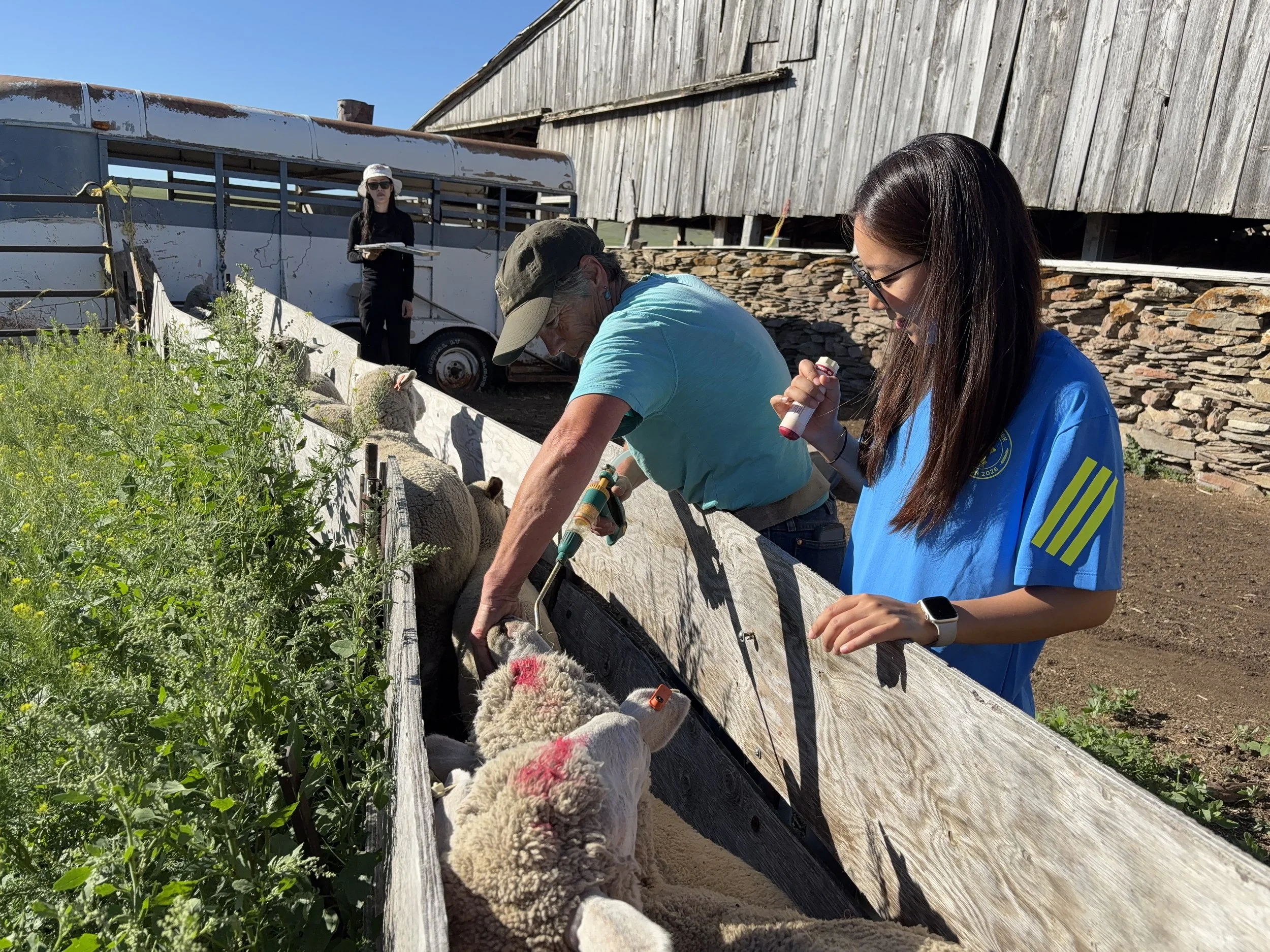
Long ago, when I worked on a ranch in Utah, I remember a neighbor’s comment about help.
We were gathering cattle on a West Desert pasture.
He had visitors who wanted to ride along so he saddled a few extra horses, then left them with me while he rode away to check the far corners of the pasture.
“Sometimes, you have a lot of people, but you don’t have much help,” he whispered.
My role that day was to keep the visitors from getting in the way without bruising any egos while the other cowboys actually gathered the cows.
I remember being exhausted that night.
So when two high school acquaintances and four new friends from California showed up at my ranch last week just in time to sort and deworm sheep, I knew I would walk a tricky tightrope.
I didn’t know what kind of egos I would deal with, but I needed to crowd each ewe and lamb into the working chute, then squirt the right amount of expensive dewormer into each mouth.
Every ovine needed a dose; none could escape the chute.
Sheep flow like water – if one goes, they all go – so this stop-and-go procedure works against a sheep’s natural instinct.
None of my guests had ever even touched a sheep, much less attempted to guide it into a narrow chute.
The sun beat down on all of us.
What could possibly go wrong?
I didn’t know any of the three men and three women well, but my quick assessment of their talents formed the basis of their assignments.
Two would guide the sheep from a small pen into the chute.
Two would act as emergency blockers when the sheep circled back to escape.
One would mark the dosed sheep after I squirted the dewormer.
One would tally.
I told all of them to keep their hands behind their backs and shuffle their feet to guide the sheep.
All of my guests were intelligent so I hoped they would figure out the geometry of herding – the angles and space between herder and herdee that change constantly during the dance of directing with body positioning instead of brute force.
The first ewes in line knew the chute was the path to grass so they trotted right in.
None of the lambs had ever walked through the chute to peaceful freedom so they required more encouragement.
The chute is built to accommodate adult sheep, but small lambs have room to flip if they lose their appetite for adventure.
Soon, I watched the women step back to allow ewes and lambs to pass, then step forward to block if they tried to back out of the chute.
Meanwhile, it didn’t take long for the men to get frustrated, attempt to wrestle ewes and make it harder on everyone.
Ewes baaed and lambs cried for their lost families, but over the din of separation anxiety I heard one man say to another “these sheep are stronger than they look.”
One by one, I dosed ovines.
The sun baked.
The chatter died.
We took a break to wipe the sweat that trickled down our faces and drink from the spigot.
I had only one ladle.
All six guests hesitated, but thirst overcame the risk of cooties.
We finished the job in time for four visitors to wash the greasy grit from their faces and hands, then get to town for lunch with potential business partners.
When one potential partner suggested a light meal, the sheep wranglers quickly vetoed that idea.
“We’re starving,” one said. “You have no idea what we have been through this morning.”
I deemed my tightrope walk a success.