
Old Tractors and Old Education
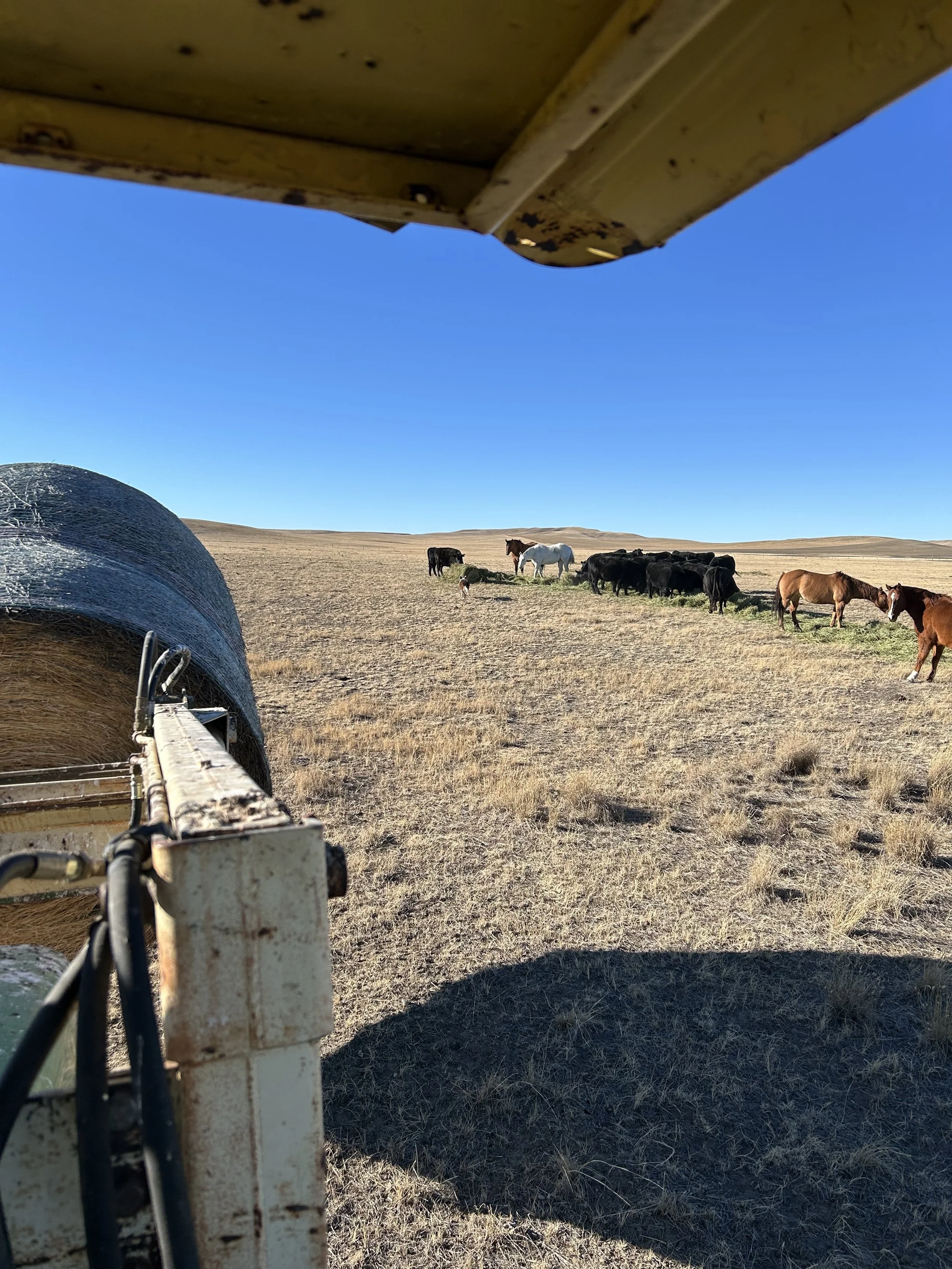
Horses, cattle and tractor in prairie land
At our latest meeting, the Montana Board of Public Education started a strategic planning process, digging into what we want the future of Montana’s public education system to look like and considering ideas about how to create it.
I couldn’t help but compare my ranch to our educational system.
I must feed and water the cows and sheep every single day.
No excuses.
Montana’s students need to learn every single day.
No excuses.
My tractor is our educational system
It is old, but it feeds hay to most of my livestock most of the time.
Our educational system is old, but it teaches most students most of the time.
When my tractor breaks, I have my skid steer as a back up to feed hay.
In education, we have alternative schools as a backup.
My tractor has its own internal systems that contribute to feeding hay – fuel, hydraulic and transmission systems all keep the tractor functioning.
Teachers, administrators and school boards all keep Montana’s educational system functioning.
My tractor is old – I call it Elvis because Elvis had one just like it.
I could buy a new tractor, just as Montana could invest in paying teachers more.
My tractor’s internal systems would be far more efficient and teachers would earn an income commensurate with their efforts.
But the larger questions are whether feeding hay is the optimum system to provide nutrients to my livestock and whether our factory assembly line educational system is the optimum system for students to learn.
My horses thrive on the rows of hay I spread. They get fat.
My healthiest cows certainly get their share, but younger, less aggressive cows and yearlings get crowded out of the best hay.
The sheep, with their nimble lips, pick the best leaves that the cows can’t pick up, but sometimes a sheep gets squashed under the tractor.
Grazing a diverse mix of vegetation all winter would meet the needs of all of my livestock without the need for feeding hay.
All of my livestock could find enough to eat without overindulgence by some.
Of course, the risk of deep snow completely covering the diverse vegetation and starving my livestock causes my blood pressure to skyrocket, but some ranchers have successfully moved to year-round grazing with a small stack of hay in reserve for snowstorms.
Educational research – some of it as old as 30 years yet still ignored – maps more effective strategies for teaching. New scientific understanding of how young brains work reinforces this research.
Still, the risk of complete failure if we overhaul the educational system overwhelms our fight or flight survival instincts.
So we settle for a dismal 30 percent or so of Montana’s students knowing how to read and understand math proficiently when they graduate – which is in the middle of the pack nationally.
But before my livestock need food, they need a drink every single day.
My springs and reservoir have always been there to provide water for my livestock, but they are drying up during this fifth year of drought.
Before students are ready to learn, they need to feel safe and well-fed.
In the past, intact families and social services kept most students safe, fed, clothed and clean, but students can no longer rely on this infrastructure.
Our educational system – and more importantly, our students -- are feeling the pain.
Just as I must find a better way to water my livestock, our educational system must find a better way to prepare students to learn.
The Board of Public Education can’t solve these problems alone, but we could partner with others who can contribute.
I’m searching for effective solutions at school and on the ranch.