Faith and Patience
Ever since last October, the forecasters have consistently promised moisture would arrive in two weeks.
Their sermon of faith and patience fell on eager ears.
At first, my neighbors and I even believed them.
After five years of drought, we really wanted to believe them.
We noted that our calves were wooly – a sure sign of an impending cold, wet winter.
We talked about the years when La Nina dumped so much snow that we all were forced to develop new ways to feed our livestock, plow our roads and get our kids to school.
This winter, we wear shorts and t-shirts and wash dust from our ankles at night.
The latest forecast promises, once again, that moisture will arrive in two weeks.
Maybe the prognosticators are right this time.
After all, we had dense fog almost 90 days ago.
The old adage that a storm will drench us 90 days after a dense fog is usually a better predictor than the meteorologists.
For the past few years, we haven’t had many dense fog days.
My dusty ankles depress me, but I keep hoping the mountains have been accumulating snow even while I can practically count the number of snowflakes that have landed on the ranch this winter.
So my friend, Katie, and I decided to check out the snowpack.
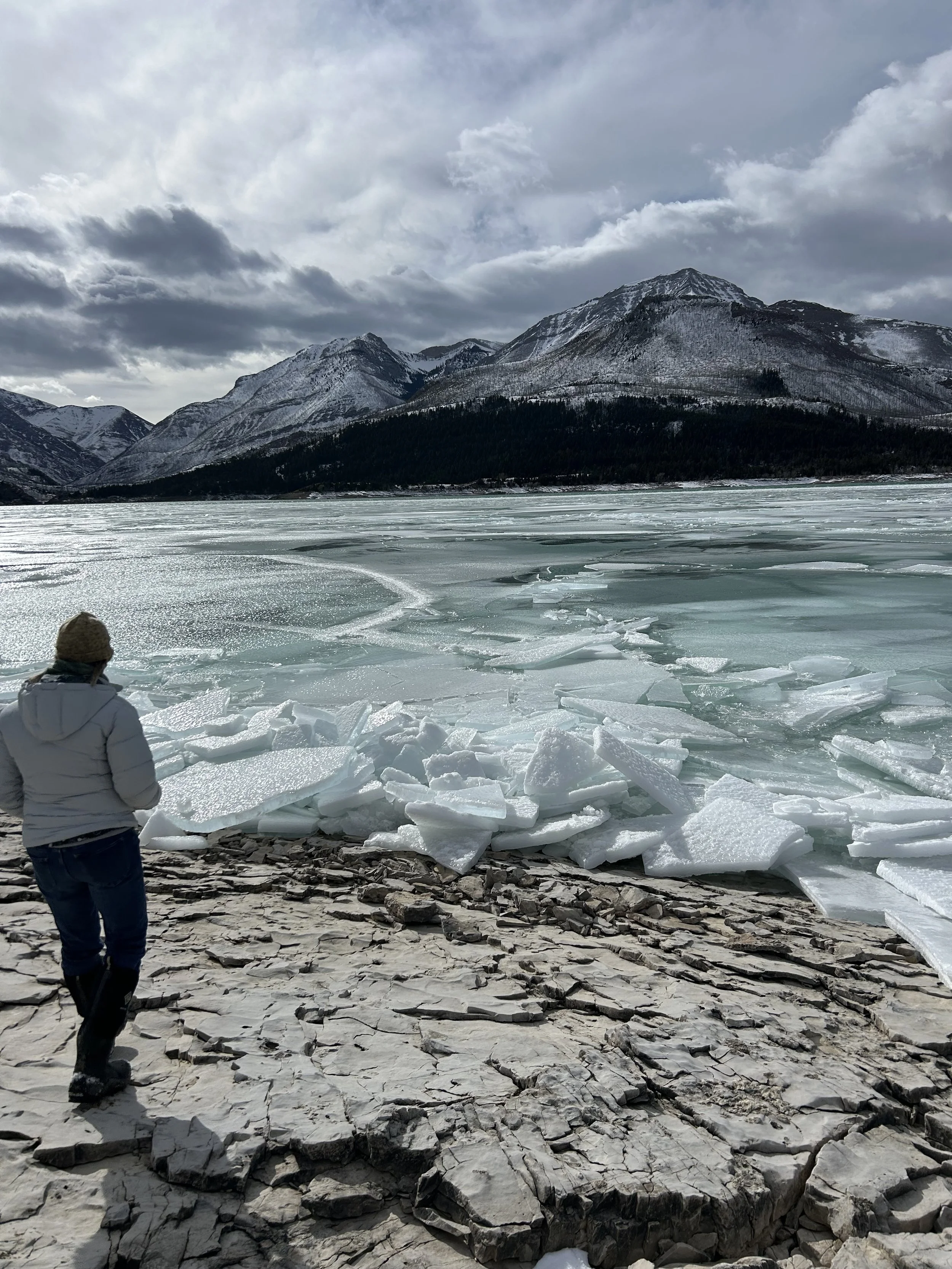
We pulled into the trailhead, opened one truck door at a time so the howling wind didn’t steal our gear, and hiked up to the local irrigation storage reservoir.
We were wearing muck boots, but we could have made the trek in tennis shoes.
Even in the shade, snow on the trail only covered my boot tread.
As we skated on the reservoir ice, we could see hillside rocks and outcrops poking through the shallow snowpack.
Disheartened, I concentrated on the lively winter sport of remaining upright on boulders of wind-blown ice kujengaed into the shore.
My faith and patience have been tested this winter, but still I want to be ready, just in case the wooly calves and dense fog know something I don’t know.
After all, we have two more months of potential winter.
Last Sunday, a crew from the Montana Conservation Corps and the Western Landowners Alliance trimmed trees so we would have branches ready and waiting.
We will use those branches to create beaver dam analogs designed to slow my creek velocity, catch sediment and recharge my water table -- like a sponge soaking up a spill.
The recharged water table will feed a far more diverse variety of plants.
When the creek begins to run dry, the sponge releases water.
Basically, the beaver dam analogs create a savings account for soil moisture.
If the creek actually flows this year.
The crew planned to meet at the tree-cutting place at 9 a.m.
At 8:30, my pickup wouldn’t start.
I transferred lunch for everyone along with saws and my chainsaw into a different truck.
Other crew members had saws, loppers and a chainsaw so we were set.
I was surprised when my chainsaw actually started.
I was not surprised when it quit.
Despite my equipment failures, we managed to trim enough branches to install three or four beaver dam analogs this spring.
The Montana Conservation Corp crew will pound short vertical posts into the creek, then weave thick and thin branches into the posts so the water will slow and pool.
We should have plenty of time to get them set up before the creek flows.
If the forecasters are as consistent as they have been for the past five months, we probably have a couple of years to get them set up.
But it has to rain someday.
Doesn’t it?