Artificial Beaver Dams
Last summer, my friend, Linda, called to ask if she and a few others could host a riparian workshop at my ranch.
I groaned under my breath.
I have a lot of respect for Linda so I wanted to say yes, but I didn’t have a riparian area.
After years of drought, my creek was dry.
The ranch was dusty and embarrassing.
When I explained all of this, Linda pivoted, suggesting a drought mitigation workshop instead.
I try hard to grow grass without any rain, but I’m behind the 8-ball.
Despite all of my ideas, not much grass grows without water.
Visitors would see my failed attempts to make this place I love thrive.
The evidence would be under their feet and in front of their eyes.
But I couldn’t say no to Linda.
Yet, just like every time I open my doors and mind, this turned into a good thing.
I have been worrying about my creek for years.
In some places, the bank is vertical and the bed is three feet below the bank.
Less than ideal.
Far less.
The plants can’t get a drink even though they are right next to the creek -- although I admit these stretches were perfect for our Annual Spring Creek Regatta – back when we had snow and rain and actual water in the creek.
I’ve tried various tactics to slow the water, raise the creek bed and water the nearby grass and shrubs.
I divided the pastures that the creeks meander through, so I let the cattle and sheep graze for a while and then let the grass grow on the streambanks.
In some places, the grass has moved into the stream and holds water long enough to spread to nearby plants.
When I wrecked my truck, I thought about throwing it into the creek as dam, like old-timers used to do.
But I was afraid of creating an oil slick and killing the grass I was trying to grow.
When Linda showed up for the workshop last fall, she brought Trina and Lori, from the Western Landowners Alliance, and Autumn, from the Montana Conservation Corps.
WLA had contracted with the MCC to work in riparian areas to mitigate drought.
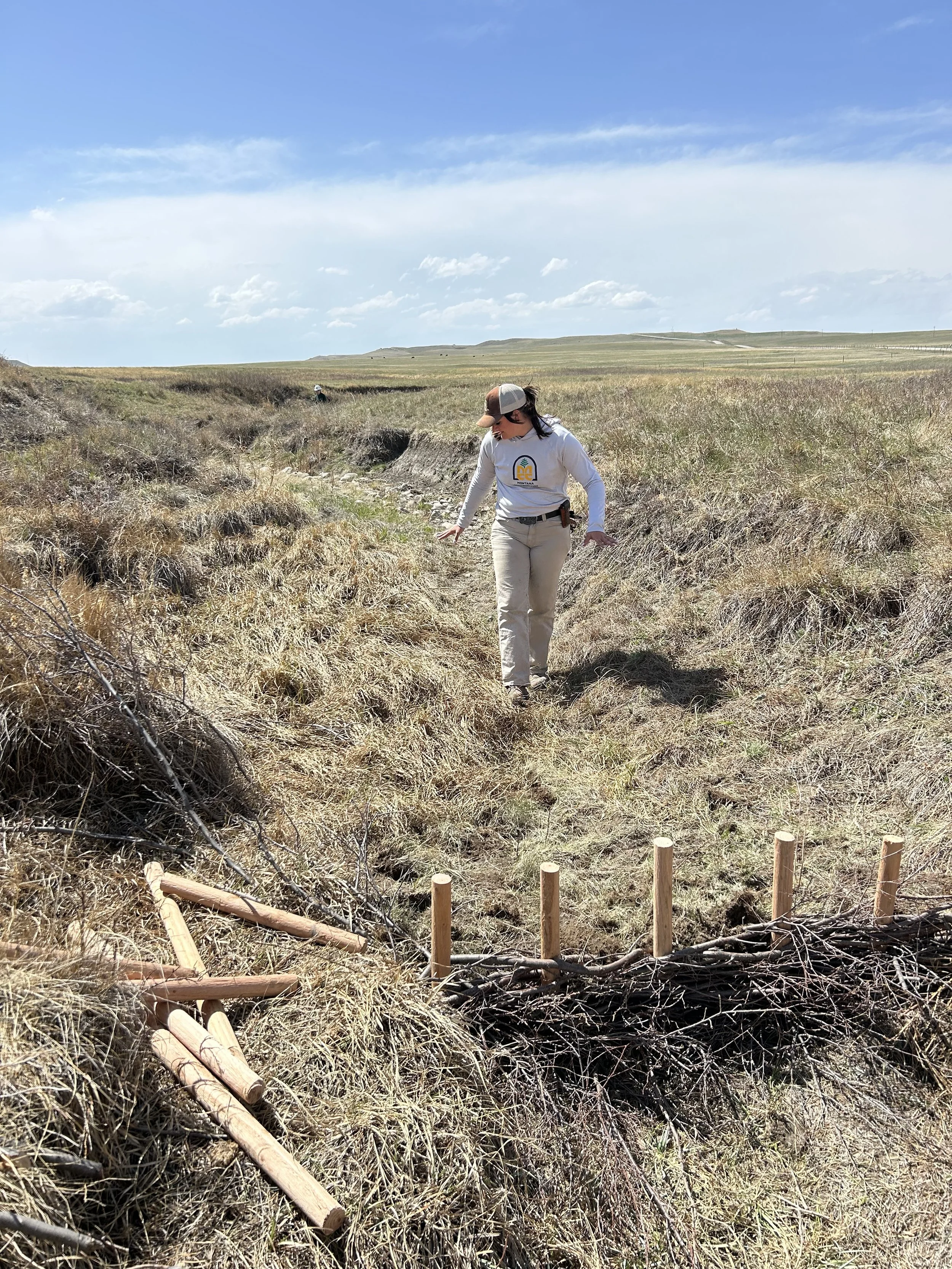
Autumn said she would bring a crew to build beaver dam analogs – short, small dams that mimic beaver dams to slow the water, build up the creek and irrigate nearby vegetation.
Last week, nine young adults showed up.
These AmeriCorps volunteers work on a variety of trail maintenance and conservation projects every summer.
This year, my creek is fortunate enough to be one of those projects.
They built 34 small, simple, yet purposeful dams.
Some dams are willows woven among posts so they slow the water.
Some are logs placed just right in front of a bend where water tries to erode the bank.
Some have a lot of sod so the water will spread to adjacent grass.
All of them work together to raise the water table so it acts like a sponge.
That sponge will release water later in the summer and keep the grass growing longer.
More feed for my cows and sheep.
Of course, I had to chat with these passionate, goodhearted, volunteer conservationists.
Around the dinner table, we talked about how each of us arrived at this place.
We walked the land as we discussed my partner Erik’s cheatgrass miracle, the succession of prickly pear cacti and the soles who walked here before us.
We all learned from one another.
Respect grew.
All of this because I said yes to a workshop that I was embarrassed to host.
Now, if only I had water in the creek this spring.