Million Dollar Rain
I searched for my muck boots.
Then I checked the downspout on the side of my house to be sure the horses that had been grazing in my yard hadn’t knocked it off.
I wondered if I still own a raincoat.
Meanwhile, raindrops cycled through pelting my roof and quietly settling into the dust, as if they couldn’t decide whether they wanted to grow up to be a NASCAR driver or a yoga instructor.
The forecast warned of potential flooding.
I laughed out loud at that idea.
I think I heard the parched hillsides laughing with me.
Maybe elsewhere, but it wouldn’t flood here.
On the first day of rain, I scraped the wet ground with my boot – dust revealed itself about half an inch down.
Still, the grass perked up.
On the second day of rain, I slipped my truck into 4-wheel drive, splashing driveway puddles over the roof.
I checked my tuna can rain gauge.
Tuna cans hold about 1.75 inches of rain. In a region that used to average 12-14 inches per year – back in the good old days -- tuna cans offer the perfect amount of optimism.
My tuna can was almost full.
On the third day of rain, even the 12 trees of the Graham Ranch National Forest that surrounds my house began to shine.
My little lambs weren’t so perky.
They hunched and shivered. Some used their mamas as umbrellas.
Two new sets of twins enjoyed the dry barn, but I knew some of the tiniest young lambs out on the pasture would not feel warm rays of sun ever again.
My livestock guardian dogs would keep the coyotes away, but they couldn’t keep the lambs dry.
One of those dogs is 4 years old, yet had never experienced this sodden drizzle in his entire life.
As the heavy rain fell, the weight on my shoulders lifted.
I felt a smile of disbelief slowly creep across my face.
Long ago, I quit counting on meteorologists’ forecasts to make my business plans.
Too many times, their moisture maps developed a big hole right over north-central Montana.
But this rain was no longer a calculated prediction.
Despite my disbelief, it was real.
I was reluctant to allow hope back into my psyche – hope that my grass could grow, my dry reservoir might fill and my cows and sheep could thrive.
Hope that my bank account might balance once again.
It had been dashed so many times in the past five years.
Forecaster after forecaster had encouraged me to hang on, to not sell livestock that I couldn’t feed.
I wanted to believe they knew a secret that I wasn’t privy to, a secret that belied the evidence in front of my eyes.
I had trusted the experts only to feel the deep ache of betrayal.
The long line of trailers at the livestock auction told me others no longer believed in fairytales either.
Today, I raise fewer than half of the cows I raised five years ago.
This spring, I decided I would sell all of them at the end of the summer, when the calves were bigger, if it didn’t rain enough.
That idea made my stomach churn, but I didn’t see another realistic option, no matter what the experts said.
Until I slogged through the mud as rain dripped off my hat brim.
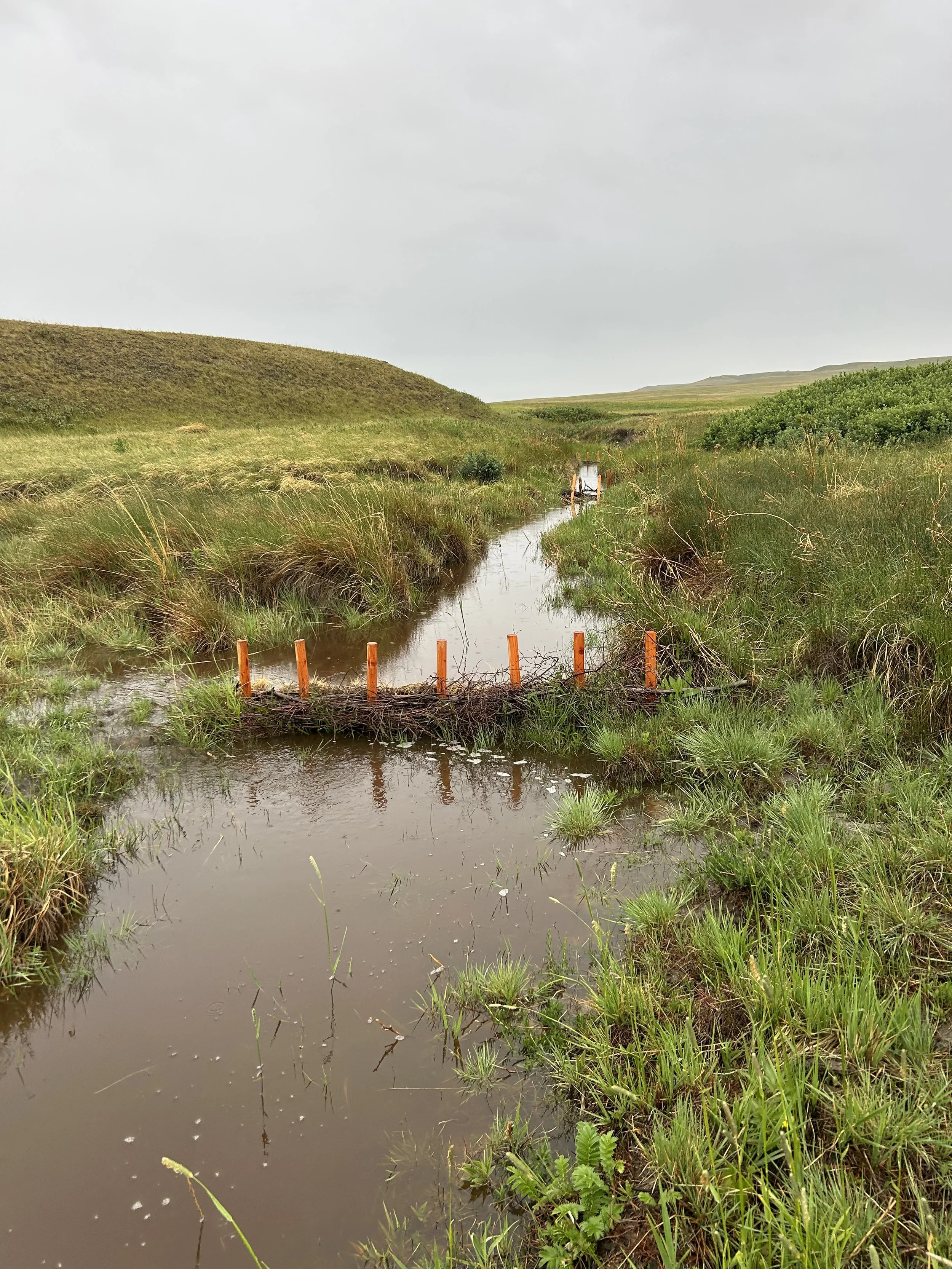
I checked my new artificial beaver dams, built just a month ago in the long-dry creek bed. Water flowed through and around them, slowing and pooling, merrily moving gently downstream.
This rain wasn’t a complete drought-buster, but it will grow a lot of grass.
I’ll ranch for another year.
Maybe I’ll even buy a raincoat.