Discovering New Perspectives
I meet the most interesting people when I step out of my comfort zone.
Last week, three men walked into my old brick building in downtown Conrad.
Julio was from North Carolina.
Channing was from Louisiana.
Mitch was from Chicago.
I spotted their shiny shoes, shook their hands and hoped I could remember their names.
I suspect spending four days in little Conrad was out of their comfort zone, too.
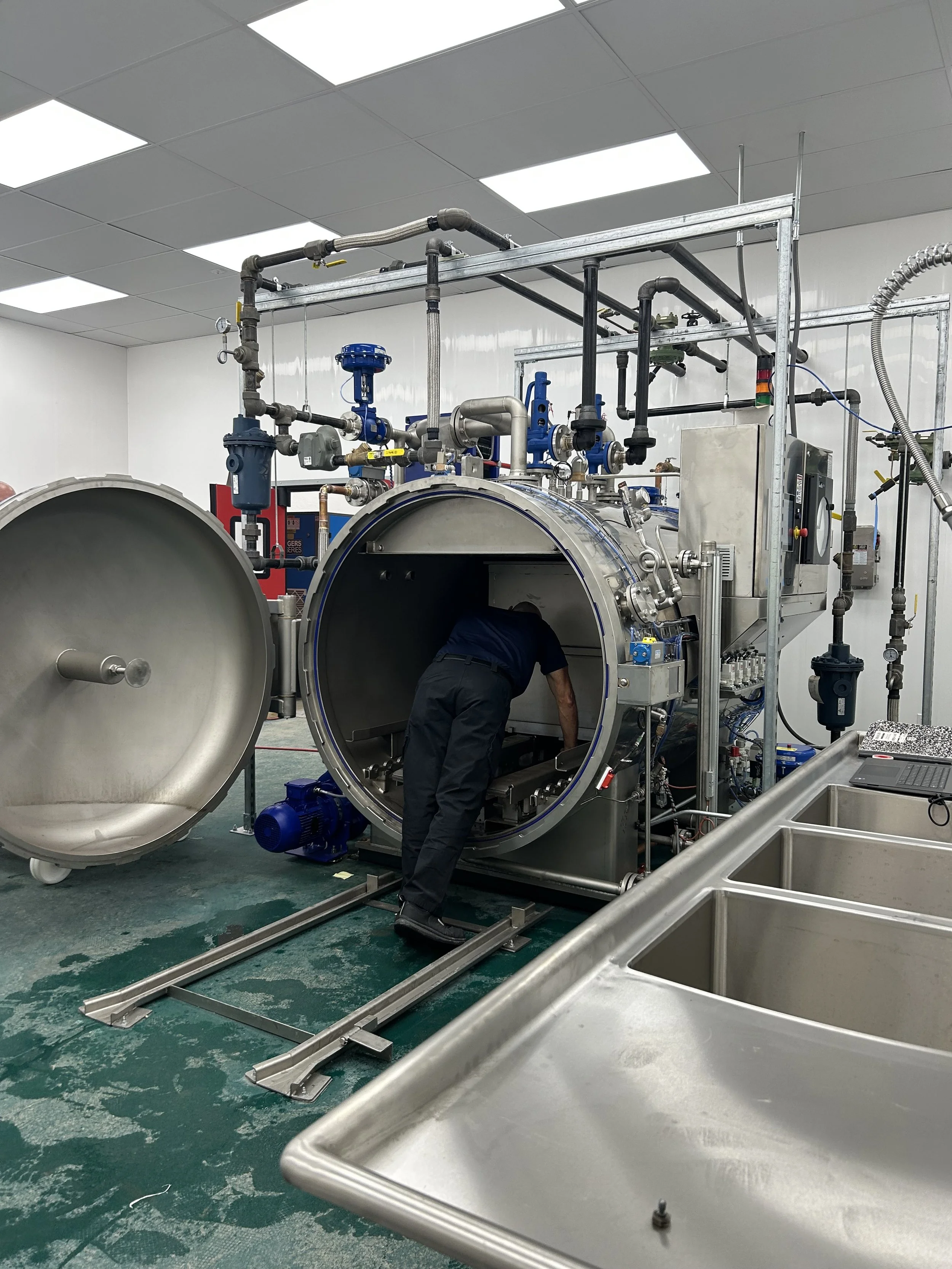
All three men were there to start my retort pressure cooker so I will be one step closer to producing shelf-stable, ready-to-eat meals.
They had to do more than just flip a switch.
On the first day, the three men connected probes, valves and sensors.
The retort needs specific amounts of water, steam and air during various parts of the cooking process.
As it heats up, it needs a lot of steam and when it cools down, it needs a lot of cold water.
The beauty of this process shines with the quality of the food when the packages come out of the retort.
Those packages are like military MREs, only instead of surviving, people who eat them thrive.
Julio connected a laptop to the retort control panel and began making adjustments.
The control panel dictated when one valve closed and another opened, all based on a thermometer tucked into the delivery pipes.
Digital readouts were duplicated with analog equipment, all designed to ensure safe food while maintaining taste and texture.
It was almost as complicated as grilling a steak to perfection on a charcoal barbeque.
The plumbers and electricians stood by, thank goodness.
The first attempt at delivering steam on demand resulted in a foggy, stench-filled room.
We had burned off the oil on the cast iron piping and discovered a few leaks.
Foreheads furrowed and wrenches appeared.
The second day, while the retort technicians tinkered, the kitchen manager, another employee and I scrambled to seal 600 pouches of water.
Channing, Julio and Mitch needed those pouches to test how well the retort would distribute heat throughout the vessel, another measure of food safety.
Each pouch had to hold 16 ounces of water and seal well enough to withstand 30 pounds of pressure and 250 degrees.
Precisely filling each pouch was slow-going, but I figured we could make up time by running the pouches through my electric band sealer.
After five pouches, a drive belt broke.
I called my friends who always have good equipment to ask if they had a vacuum sealer.
They had two.
We double-sealed each pouch and crossed our fingers that the seals would hold.
And I hoped we wouldn’t burn up my friends’ vacuum packers.
I wanted to offer some Montana-style hospitality and invite the out-of-towners to the ranch for dinner, but I took one look at their rented car and knew it would get stuck in the mud.
I wasn’t about to apologize for mud.
Instead, my mom served dinner at her house.
As the conversation meandered, my respect for the three men grew.
Julio had written the computer program for my retort -- integrating food science and safety; the physics of liquids, viscosity, heat and pressure; computer coding; graphics and human nature.
Channing, the retort mechanic, had directed robots to search for a sunken ship sitting almost 10,000 feet below Antarctic ice. The ship had been a part of renowned explorer Ernest Shackleton’s South Pole expeditions.
Mitch, just three months into the job, offered to advocate for anything I need.
By the fourth day, the retort functioned, the pouches of water withstood five tests and my brain was fried from training.
I had introduced strangers to Conrad and they had introduced me to completely new perspectives.