Hues of June
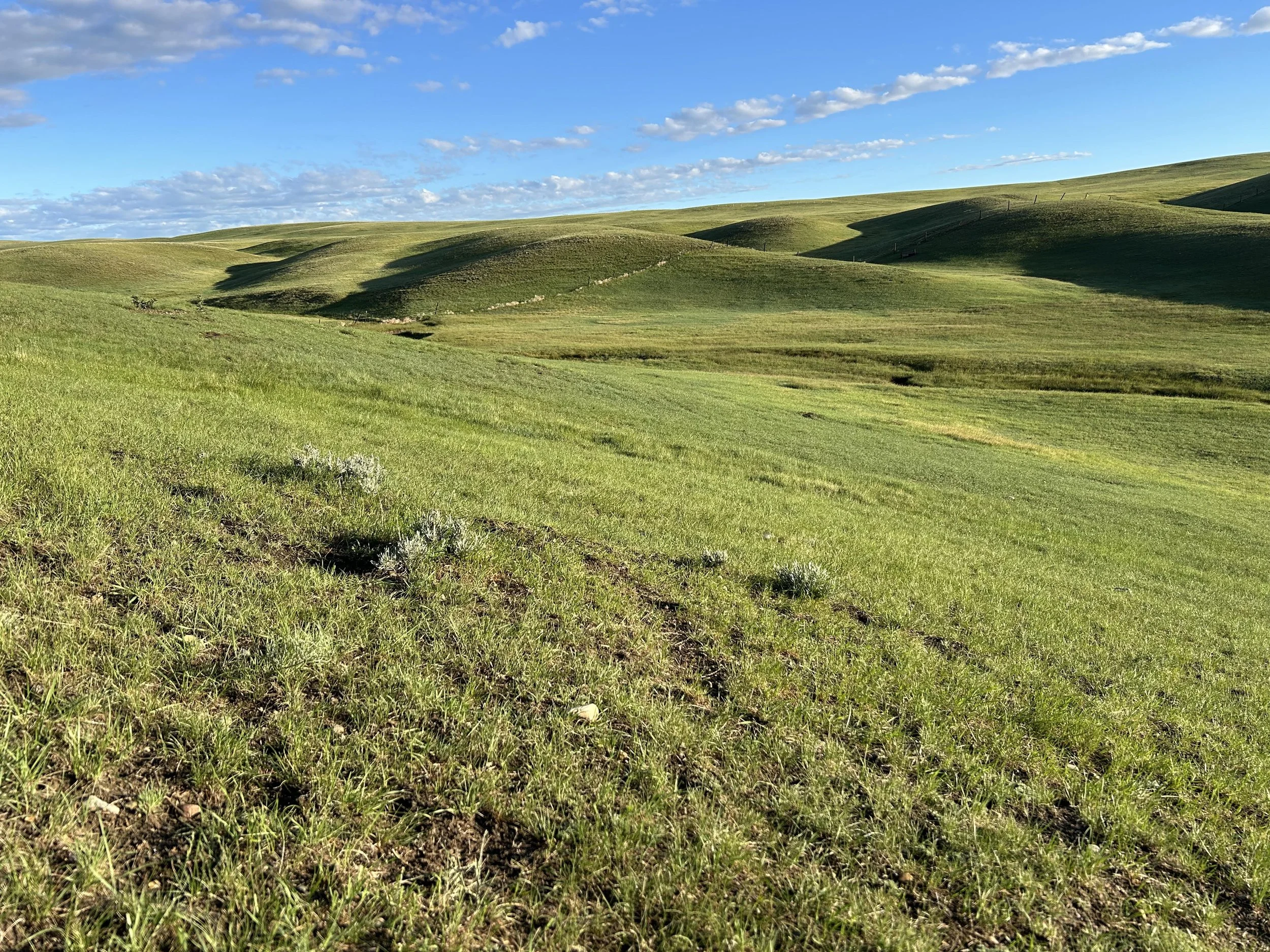
I awaken to the birds singing their dawn song, a gift from my open window.
It’s early – birds in Montana get long daylight hours in June.
I pour a cup of coffee and take the dogs for a stroll.
June is the perfect month for semi-knowledgeable geeks to look at
grass in the morning.
Enough cool season grasses are going to seed so they are easy to identify.
Others declare themselves by their hue of green.
As I meander through my pasture, I am struck by so many variations of
green – more greens than a box of 128 crayons.
Western wheatgrass stands out with its signature blue-gray green.
Cows and sheep love western wheatgrass, but it takes longer to mature
than some of the other species so I keep my livestock off different
pastures each spring until the western drops seeds.
I spot that darned cheatgrass with its red-tinted pokey seedheads in a
mix of other green grasses.
They all enjoy the added organic matter from a bale I fed a couple of
winters ago. The old hay holds the moisture from a week ago and keeps
the ground cool.
The other species are slowly crowding out the cheatgrass, but the
cheatgrass has an effective survival mechanism – those seeds will sit
in the soil for years until they sense a competitive edge.
Farther along, patches of truer-green-colored bluebunch wheatgrass give me hope.
This is the chocolate chip mint ice cream grass of the northern
plains, a favorite of grazers yet easily eaten out of existence.
When I manage my grazing cattle, sheep and horses so that those
patches of bluebunch wheatgrass expand, I feel good.
Badger holes document plant succession, too.
Just like a plowed field or cultivated garden, that bare ground offers
a perfect bed for new starts.
A few prickly pear cacti claim the center of the mound while
globemallow and brave grasses edge in.
Eventually, the grass will sprout within the protection of the prickly
pear. It will steal enough moisture and nutrients to kill the prickly
pear, but for now, the cactus-green prickly pear thrives.
On north-facing hillsides, the sage offers its own shade of green.
I appreciate the deep roots of the sage that hold the soil in place
during gullywashers.
I’d like to see it work a little more often.
Crested wheatgrass slides into a few pockets of pasture.
Once declared the Savior of Savannas, range managers planted it across
the West during the 1960s and 70s.
Then they discovered that crested wheatgrass maintains a monoculture
where no other plants take root and soil microbes perish.
Like a hero who cheats on his wife, crested wheatgrass fell from grace.
Still, it is the staple of my yard and my go-to grazing in the early spring.
Neon green Kentucky bluegrass flashes its recent spurt of growth.
Last week’s rain makes it the Golden Tempo in the rangeland forage derby.
Bright orange globemallow flowers punctuate the prairie with accent
colors in the sea of green.
White death camas flowers have passed their prime.
I breathe a sigh of relief.
None of my sheep must have taste-tested the deadly poisonous relative
of the onion this year.
One year, a 3-year-old ram took a bite of death camas.
Within a few hours, his hind end was paralyzed.
Buds on the prickly pear cacti are bursting. Soon, delicate yellow,
pink and orange blossoms will erupt from their spiny leaves.
Caragana bushes that I planted about 15 years ago offer a different
version of green, highlighted by tiny yellow blooms.
Those trees are tougher than I am.
I head back to the house for breakfast, refreshed and renewed by June’s hues.