Grasshoppers or Grazing
The grasshoppers are back.
They are not as bad as they were a few years ago when I bought a butterfly net at the Dollar Store to catch grasshoppers as big as my thumb.
That year, I knew my daily sweeps that filled bread bags with mushy exoskeletons would not impact the local grasshopper population, but they saved my sanity.
I had to do something.
Sweeping up grasshoppers with a butterfly net was at least as effective as spraying acres of rangeland to eliminate predatory insects while protecting the beneficial ones.
Plus, you can’t buy aerial insect spraying services at the Dollar Store, only the Thousand Dollar Store.
Besides, my daughter, Abby, and I had fun each evening competing to fill the net in a single scoop as we trudged over the dusty, decimated range to gather the sheep.
This year, the grasshoppers are not as big yet, but they are growing.
They munch away on the dry hillsides, beating the sheep to the nutritious grass.
It aggravates me to watch my grass disappear while my livestock don’t reap the benefit.
After all, I tell people that I sell meat, but really I sell grass via cattle and sheep that turn into meat.
In spots where I rolled bales of hay out over the last few years and the leftover organic matter protects grass from heat and evaporation, I see fewer grasshoppers.
That preventative strategy worked, but I’m still working on covering all of my rangeland with hay each winter.
At a conference a couple of years ago, an entomologist explained the window of attractive pheromones that stressed grass emits.
I forget the details, but I remember the take-home message – grasshoppers avoid dry, dead grass and thriving grass. They like drought-stressed yet still trying grass the best.
I spotted the grasshoppers in my dryland alfalfa field, too.
It must be drought-stressed.
Typically, I cut and bale my alfalfa, then let my livestock graze the regrowth in late fall.
By the time they graze it, the alfalfa leaves -- where all the best nutrients reside -- have fallen to the ground.
My cows and sheep don’t love the alfalfa – they select the grass first, eating the alfalfa only when all of the grass has disappeared.
All in all, the alfalfa field provides some decent grazing, but never as good as I think it should.
This year, my alfalfa is marginal.
Late frosts and an extremely dry May stunted it. It shot up after we received June rains, but the growth couldn’t compensate for the poor start.
So I have a choice.
I could invest the expense of harvesting to cut it for hay and get about six weeks of feed from the field.
Or I could allow my cattle and sheep graze it and get about six weeks of feed from the field.
Unless the grasshoppers get to it first.
So I chose to try an experiment. I’ll let my sheep graze the leafy alfalfa now, before the grasshoppers take the best part.
This experiment could backfire.
I’m using my fall pasture now.
I’ll turn the cows and sheep into a less nutritious grass pasture by November.
I might need to use two or three pastures if the grasshoppers have found them first.
Hay isn’t cheap, but I’ll buy hay from someone who has a better crop.
Hopefully, they baled their hay before the grasshoppers found it.
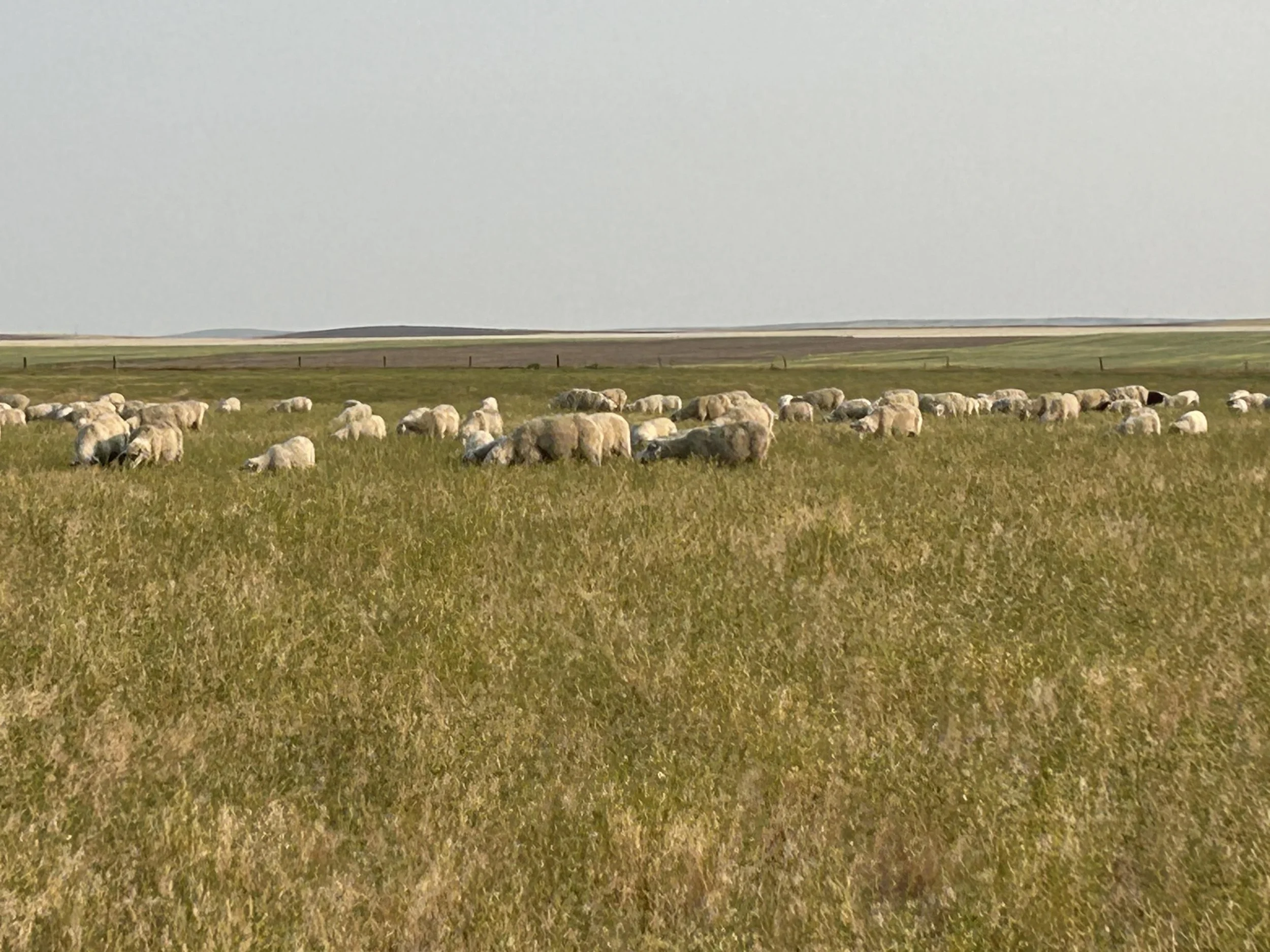
When the sheep realized I would let them into the forbidden field, they piled through the gate.
Then they stuck their heads down, hardly moving as they filled their bellies.
My sheep don’t care about my gamble on their future.
They only know they are happy today. That’s enough for them.