
Different Yet Similar Wilds of Montana
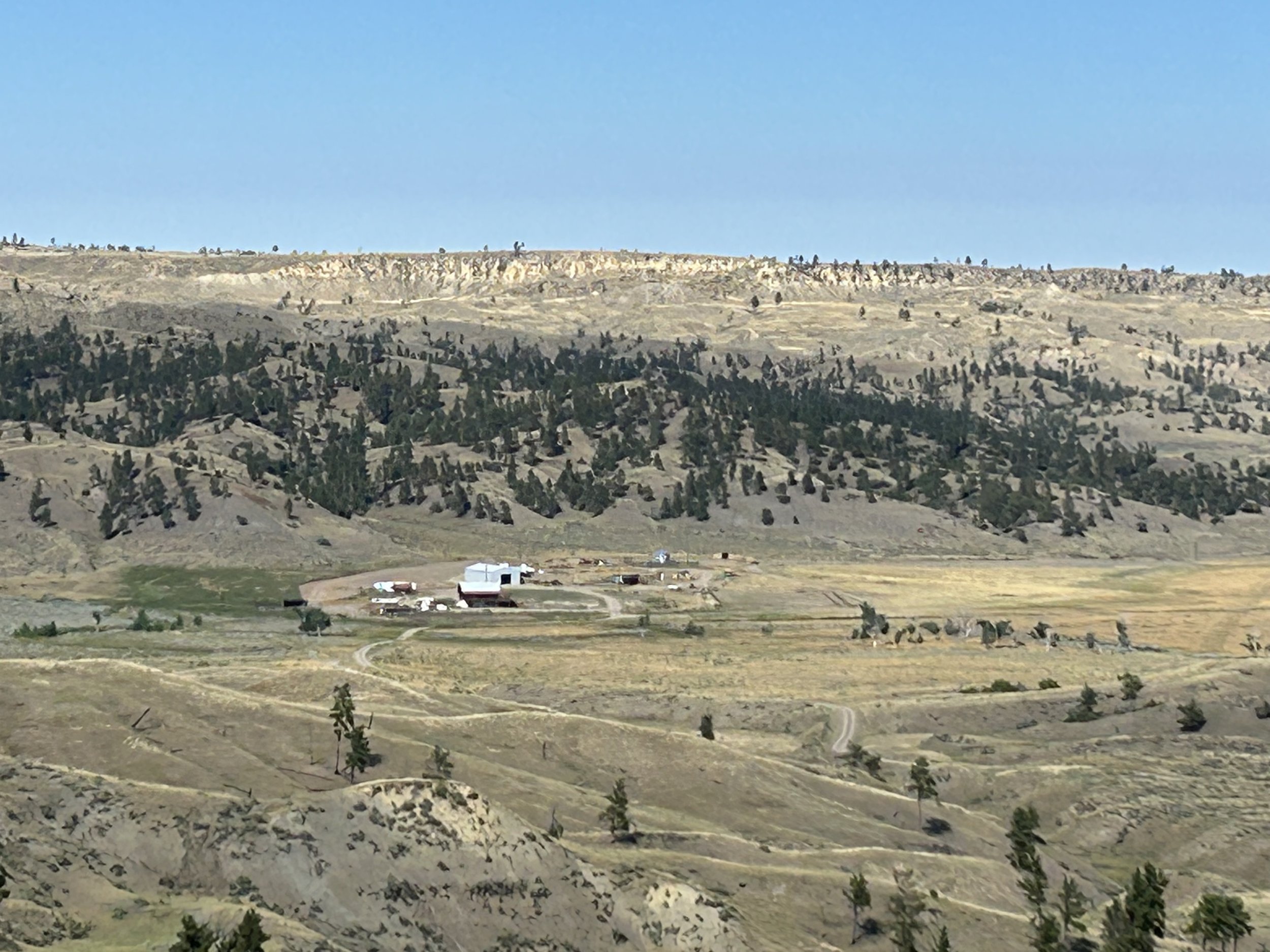
My partner, Erik, and I took a jaunt to the Montana tourist mecca of Zortman last week, looking for fossils and exploring a part of Montana that we had yet to see.
Our pre-conceived notions exploded like a fifth-grade science project.
Zortman, a mining town of 70 residents, nestles into the east side of the Little Rockies.
Surrounded by multiple townships of prairie, this is the last island mountain range until the Appalachians rise in Ohio.
It’s the perfect place to disappear from society.
As we sat at the bar with our dogs at our feet, two friendly patrons directed us to the best fossil beaches on Fort Peck reservoir.
My only understanding of Fort Peck and the badlands between the lake and Jordan, population 356, comes from Ivan Doig’s book, Bucking the Sun, plus stories of fierce, passionate, hard-scrabble ranchers.
It was that and much more.
As we drove the two-track roads, we wondered about the people who abandoned log homesteads, community churches and schools.
We also marveled at prosperous ranch headquarters, dotted with new homes for the younger generation next to the old ones.
When we asked directions from one ranch woman, we also talked about things we have in common – hay prices, getting water to cattle where the grass is, and how sometimes we learn the hard way from our attempts to care for our cattle.
We forgot all about our phones as we explored the vast wilderness of grass, verdant coulees and unexpected forests.
I found myself sharing stories about my years living on the West Desert of Utah, where the nearest grocery store was 140 miles away and where outlaws appeared at our doorstep, stayed a few days and then vanished a few hours before a deputy knocked.
I wanted to raise my kids in a place like that, where a person discovers her core values and code of ethics because nobody else is there to impose them on her.
The grasslands -- lush and green after heavy June and July rains although we saw a lot of dry reservoirs just like at home – were a wilderness as vast as the Utah Desert and our familiar Bob Marshall Wilderness.
They all offer the same quiet yet mostly benevolent power that could kill us if they wanted with one wrong turn or lack of preparedness.
My years on the Utah desert were stuffed into our cooler full of snacks and drinks.
Both the Bob Marshall and the Jordan-area breaks have the same effect, erasing the outside world from our consciousness.
We focused on the here and now in front of us -- the grandeur of the ancient rocks, mud and lifeforms that had been buried, but now expose the stories that brought us to this moment.
We were glad to have good tires because those ancient rocks are sharp and jagged.
Just like our land, this land sculpts the personalities of the people who live there.
They are friendly and helpful to those who are respectful yet disdainful of those who attempt to impose society’s rules that don’t apply on this land.
The unspoken message is loud and clear: Don’t try to tell me what to do while I am thriving where you would perish.
Don’t assume I will rescue you from your unpreparedness -- I will, but only because I’m nice, not because I want to.
Recognize and respect my ability to thrive independently.
As I pulled into my ranch, I realized I’m a better person after building my understanding for my neighbors who face harsher challenges than I face, live by the code of ethics they developed for themselves, and love their version wilderness the way we love our version.